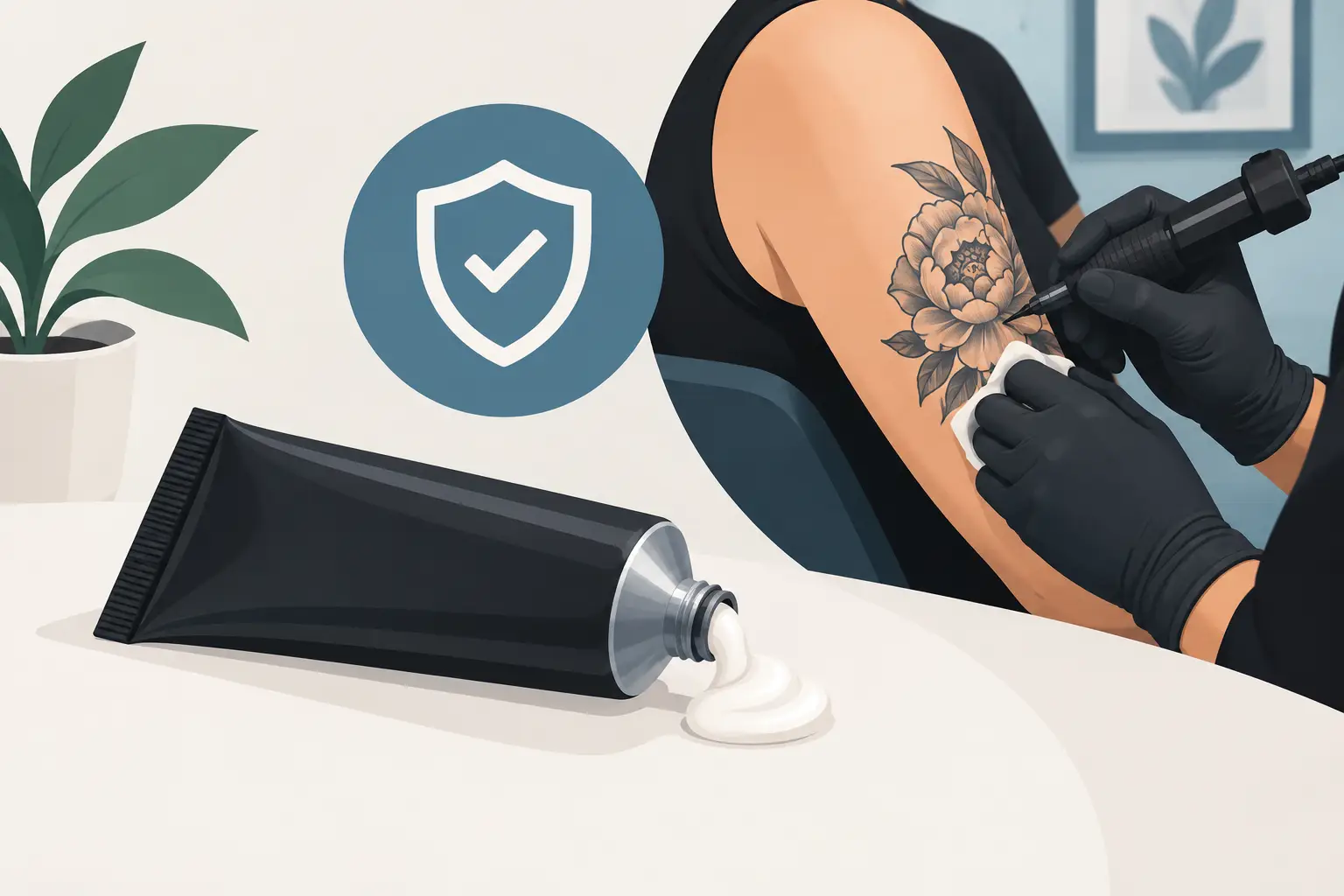
A long tattoo sitting can feel very different when you are prepared properly. The question, “is tktx numbing cream safe”, deserves a straight answer: it can be used safely by many adults when it is genuine, suited to the procedure, applied exactly as directed and used on healthy skin. It is not automatically right for every person, every body area or every treatment.
Topical numbing cream is a pain-management product, not a reason to ignore your health history or push through a reaction. The safest approach is simple: know what you are applying, test your skin before the appointment, and stop if anything does not feel right.
Is TKTX numbing cream safe? The honest answer
Safety depends on the formula, the amount used, the condition of your skin and your individual sensitivity. Products sold under the TKTX name can differ by variant, so never assume that a cream with familiar packaging has the same ingredients, strength or instructions as another one. Read the label on the tube and outer packaging you receive, including the ingredients, directions, cautions and expiry information.
A genuine product from a trusted source gives you a clear starting point: you know what you have bought and can follow the correct application guidance. Counterfeit or poorly stored creams create a different risk altogether. They may have unclear ingredients, altered strength, damaged seals or misleading claims. A cheap tube from an unverified marketplace seller is not a bargain if you cannot establish what is inside it.
TKTX Tattoo supplies authentic TKTX products and helps customers choose between deep-numbing, fast-numbing and mid-procedure options. That matters because the right product is not simply the one with the boldest strength claim. It is the one intended for your procedure, used in the right way.
What can make a numbing cream unsafe?
Topical anaesthetic ingredients work by temporarily reducing sensation in the skin. If too much is used, if it is left on longer than instructed, or if it is applied across a very large area, more of the active ingredient may be absorbed than intended. Covering cream to aid absorption is common with some pre-treatment instructions, but doing so outside the stated directions can increase risk.
Damaged, inflamed or recently treated skin also needs extra caution. A cream designed for intact skin before a tattoo should not be treated as a general-purpose product for cuts, rashes, sunburn or irritated areas. Keep it away from eyes, lips, inside the nose and other mucous membranes unless the product specifically states it is suitable for that exact use.
Allergic and irritant reactions are another consideration. Tingling or mild temporary changes in sensation may occur with numbing products, but burning, significant itching, swelling, hives, blistering or a spreading rash are warning signs. Remove the product according to its instructions, gently wash the area and do not continue with the treatment.
If you feel faint, unusually dizzy, breathless, confused, develop palpitations or have swelling around your face or throat, seek urgent medical help. These symptoms are not something to wait out in the tattoo chair.
Patch test before your appointment
A patch test is one of the most useful precautions you can take, particularly if you have never used that exact product before. It cannot guarantee that you will not react when a larger area is treated, but it can reveal an obvious sensitivity before your appointment day.
Apply a small amount to a discreet patch of clean, intact skin, following the product directions for contact time. Remove it as instructed, then check the area over the next 24 hours. Do not proceed if you develop redness that persists, a rash, itching, swelling, burning or any other unusual reaction.
Do not patch test on the tattoo area if it is already shaved, irritated or compromised. Give yourself enough time to do this properly. Trying a new cream for the first time an hour before a full-day back piece leaves you with no sensible fallback plan.
Who should speak to a professional first?
If any of the following apply to you, check with a pharmacist, GP or the clinician carrying out your procedure before using a topical numbing product:
- You have previously reacted to local anaesthetics, numbing creams, plasters, cosmetics or skin adhesives.
- You are pregnant, breastfeeding, or buying the product for someone under 18.
- You have heart, liver, kidney or circulation problems, or take medication that could affect your suitability.
- You have eczema, psoriasis, dermatitis, an active skin infection or broken skin around the intended area.
- You are having a medical, laser or cosmetic procedure with its own pre-treatment rules.
Your tattoo artist or practitioner should also know you intend to numb. A professional studio may have a preferred preparation process, particularly for placements where skin texture, positioning and timing matter. Numbing cream can improve comfort, but it should never replace clear communication with the person performing the procedure.
Use the right type for the right moment
TKTX colours are used to help customers identify different numb types and strengths, rather than forcing everyone into one choice. Deep-numbing options such as Yellow and Black are typically selected for clients seeking stronger pre-procedure numbing. Faster options such as Gold, Red and White may suit customers who need a quicker preparation window. Deep Blue and mid-procedure gel have their own intended roles.
The key is to follow the directions for the specific variant in your hands. Do not copy timings from a friend’s tube, a social-media video or a different colour. Avoid layering different numbing creams together, reapplying repeatedly because you are anxious, or combining a pre-numb with another anaesthetic product unless a qualified professional has told you it is appropriate.
More product does not mean better numbness. It can mean more mess, more irritation and more chance of a reaction. Apply only the amount stated, to the area stated, for the time stated.
Genuine stock is part of safe use
When customers ask about safety, they often focus only on the active ingredients. Authenticity belongs in the same conversation. Counterfeit creams can mimic a well-known tube design while offering no reliable information about manufacturing, storage, age or formulation. False certificates and copied labels do not protect your skin.
Before using any numbing cream, inspect the product. Check that the seal and packaging are intact, that the printing is clear, and that the instructions and expiry details are present. Be cautious of listings that promise impossible numb times, claim every procedure is completely painless, use inconsistent product photos or sell at a price that makes no commercial sense.
Store your cream as directed, keep it out of children’s reach and do not use it after its expiry date. If the tube has leaked, smells unusual, has changed texture or has no dependable product information, do not apply it.
A safer routine on appointment day
Start with clean, dry, intact skin. Follow the directions supplied with your exact cream, including application amount, contact time and whether covering is required. Wash your hands before and after handling the product, and remove excess cream completely before the procedure begins if that is what the instructions require.
Plan your timing rather than rushing. Arrive hydrated, having eaten normally unless your practitioner has instructed otherwise, and tell them what you have used. If you become unwell or your skin looks irritated after removing the cream, postpone rather than hoping it settles once the procedure starts.
The goal is not to prove you can tolerate the maximum possible numbness. It is to make your appointment more manageable while protecting your skin, your result and your wellbeing. Choose genuine stock, patch test in advance, respect the instructions, and let comfort be part of a properly prepared treatment. Happy Numbing!