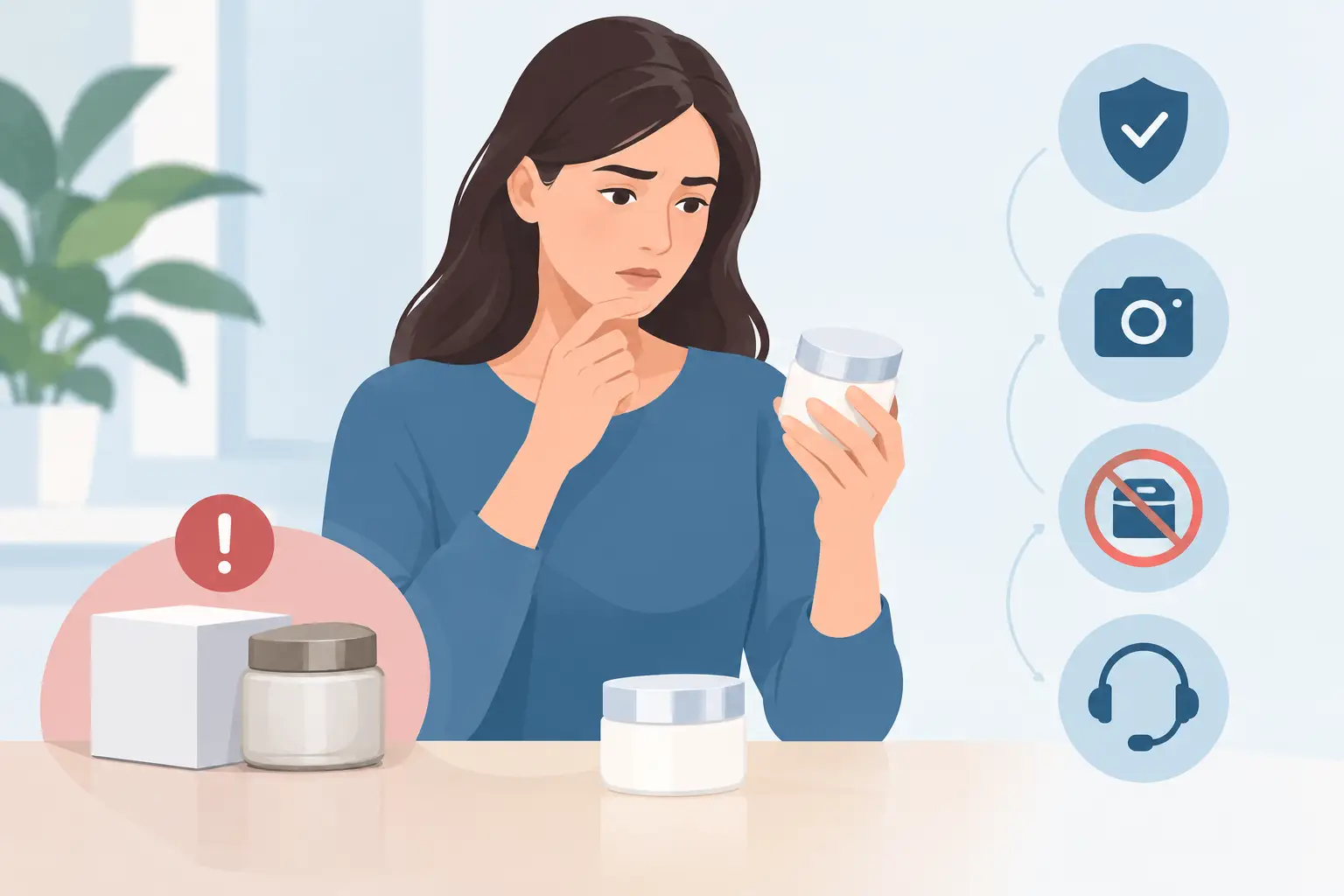
A counterfeit cream incident is not something to brush off and hope for the best. Whether a tube arrives with unfamiliar packaging, the cream looks or smells wrong, or your skin reacts differently than expected, stop using it before your tattoo, piercing or cosmetic treatment goes any further. Numbing products sit directly on the skin, often beneath a wrap, so knowing exactly what you have applied matters.
Not every unexpected result proves a product is fake. Skin sensitivity, incorrect application, expired stock and using a product on irritated skin can all cause problems. But if there is any doubt about where the cream came from or what it contains, treat it as a safety issue first and an ordering issue second.
A counterfeit cream incident needs prompt action
The right response depends on whether you have used the cream and whether you have symptoms. Do not try to test the product again to see if the same thing happens. A second application can make irritation worse and gives an unknown product another opportunity to affect your skin.
If the cream is still on your skin, remove it carefully according to the product instructions where possible. Use lukewarm water and a mild cleanser, without scrubbing the area. Do not apply another numbing cream, exfoliant, perfume, aftercare product or home remedy to cover the reaction. Keep the skin clean and leave it alone while you assess what is happening.
Take these steps straight away:
- Stop using the cream and do not pass it to a friend, client or tattoo artist.
- Postpone the procedure if the skin is red, swollen, broken, unusually pale, blistered or painful.
- Keep the tube, box, seal and any remaining product rather than throwing them away.
- Photograph the packaging, batch or lot details, order confirmation and the cream itself in good light.
- Contact the seller through the method used to place the order and keep copies of every message.
If you develop trouble breathing, facial or throat swelling, severe pain, widespread hives, faintness or a rapidly worsening reaction, seek urgent medical help by calling 999. For non-emergency medical advice in the UK, contact NHS 111, particularly if irritation persists, spreads or concerns you. Tell the clinician what you used, when you used it and whether the area was covered with cling film or another dressing.
Tell your practitioner before treatment starts
A tattoo artist, permanent make-up technician or aesthetic practitioner needs to know that an unknown cream has been used, even if the reaction appears mild. Covered skin can look and behave differently during a procedure. It may be over-softened, inflamed or difficult to work on, and continuing can affect comfort, healing and the final result.
A good practitioner will not pressure you to continue simply because your appointment has arrived. Rescheduling is frustrating, especially when you have waited weeks, but it is usually the sensible call when skin condition or product history is unclear. This is particularly true for large tattoos, laser treatments and procedures on sensitive areas.
Preserve the evidence before you request a refund
The tube may be the only useful evidence you have. Keep it sealed in a bag or container away from children and pets, and do not open it repeatedly for comparison. Record the date it arrived, the date it was used, how it was applied and how long it remained on your skin.
Your order record matters just as much as the packaging. Save the product listing, seller name, advertised claims, payment receipt, delivery details and screenshots of any certificate or authenticity promise. Counterfeit sellers can remove listings quickly, alter product photographs or close an account after complaints begin.
Report the concern to the selling platform if you bought through a marketplace. If you believe a product may be unsafe or counterfeit, you can also seek consumer advice through Citizens Advice, which can refer reports to the appropriate local Trading Standards service. Be factual: describe what you bought, where it came from, what was different and whether anyone experienced a reaction. Avoid making claims you cannot support, but do not let a seller dismiss a genuine concern with a vague reassurance.
A refund is useful, but it does not answer the main question: was the product traceable and suitable to use? A seller who cannot identify their stock source, explain the packaging or provide meaningful order support is not offering the confidence you need for a skin-applied product.
Signs that should make you pause
Counterfeit products do not always look obviously fake. Some copy colour schemes, tube shapes and logos closely enough to seem convincing at first glance. Equally, a packaging change on its own does not automatically mean a product is counterfeit. Manufacturers can update labels, and stock may differ by batch. Look for a pattern of warning signs rather than relying on one detail.
Be cautious if the seal is broken, the printing is blurred, spelling is poor, the batch details are missing or the product differs sharply from the listing images. An unusual texture, separated cream, strong chemical smell or damaged tube should also end the conversation before application. Products advertised at an implausibly low price, with no clear business details or with delivery promises that keep changing, deserve extra scrutiny.
The most reliable check is traceability. Can the seller explain where the product came from? Do they provide clear product guidance, responsive support and a proper order record? Can you see consistent information about intended use rather than broad promises that one cream is right for every procedure? A copied certificate image or a bold claim of being “official” is not proof on its own.
Why tattoo and cosmetic clients face extra risk
Numbing cream is often used before a procedure that already places stress on the skin. Tattoos create controlled trauma to the surface. Piercings break the skin. Laser and aesthetic treatments may involve heat, active ingredients or sensitive areas. Adding an unknown cream into that preparation can complicate an otherwise well-planned appointment.
There is also a practical trade-off. A cheaper marketplace listing may look like a quick win when an appointment is close, but non-delivery, untraceable stock or a product that cannot be used safely can cost far more than the saving. You may lose a booking fee, need to delay treatment or arrive at the studio with skin that is not ready.
Even genuine numbing products must be selected and applied correctly. Strength, numb type, treatment area, skin condition and the timing of application all matter. Never apply a topical numbing product to broken, infected, sunburnt or severely irritated skin unless a qualified healthcare professional has advised you to do so. Follow the supplied directions exactly, including any guidance on wrapping and removal.
Preventing the next counterfeit cream incident
Buy before your appointment date rather than rushing to find stock the night before. That gives you time to inspect the parcel, read the directions and contact the retailer if anything is wrong. It also removes the temptation to choose an unknown seller simply because they promise the lowest price or quickest delivery.
Choose a specialist retailer that can explain the difference between products in plain language. For example, deep numbing and fast numbing are not interchangeable labels, and a retailer should help you match the option to the stage and type of procedure. At TKTX Tattoo, product selection is built around clear colour-based guidance, genuine stock and support when customers need an answer before treatment.
Before ordering, check that the retailer gives a real point of contact, clear dispatch information and practical application advice. Read recent customer feedback with care, looking for comments about delivery, product condition and support rather than only star ratings. Once your order arrives, compare the item with the retailer’s current product information before the day of your appointment.
If you are buying for a studio or repeat clients, keep a simple record of supplier, order date and batch details for each delivery. It takes minutes and makes it far easier to isolate an issue if a client reports a concern later. Buying in bulk only makes sense when the source remains consistent and accountable.
Comfort should never require guesswork. If a cream cannot be traced, its condition is questionable or your skin reacts unexpectedly, pause the treatment and choose safety over a rushed appointment. Genuine preparation gives you a better chance of walking into the chair calm, informed and ready. Happy Numbing!