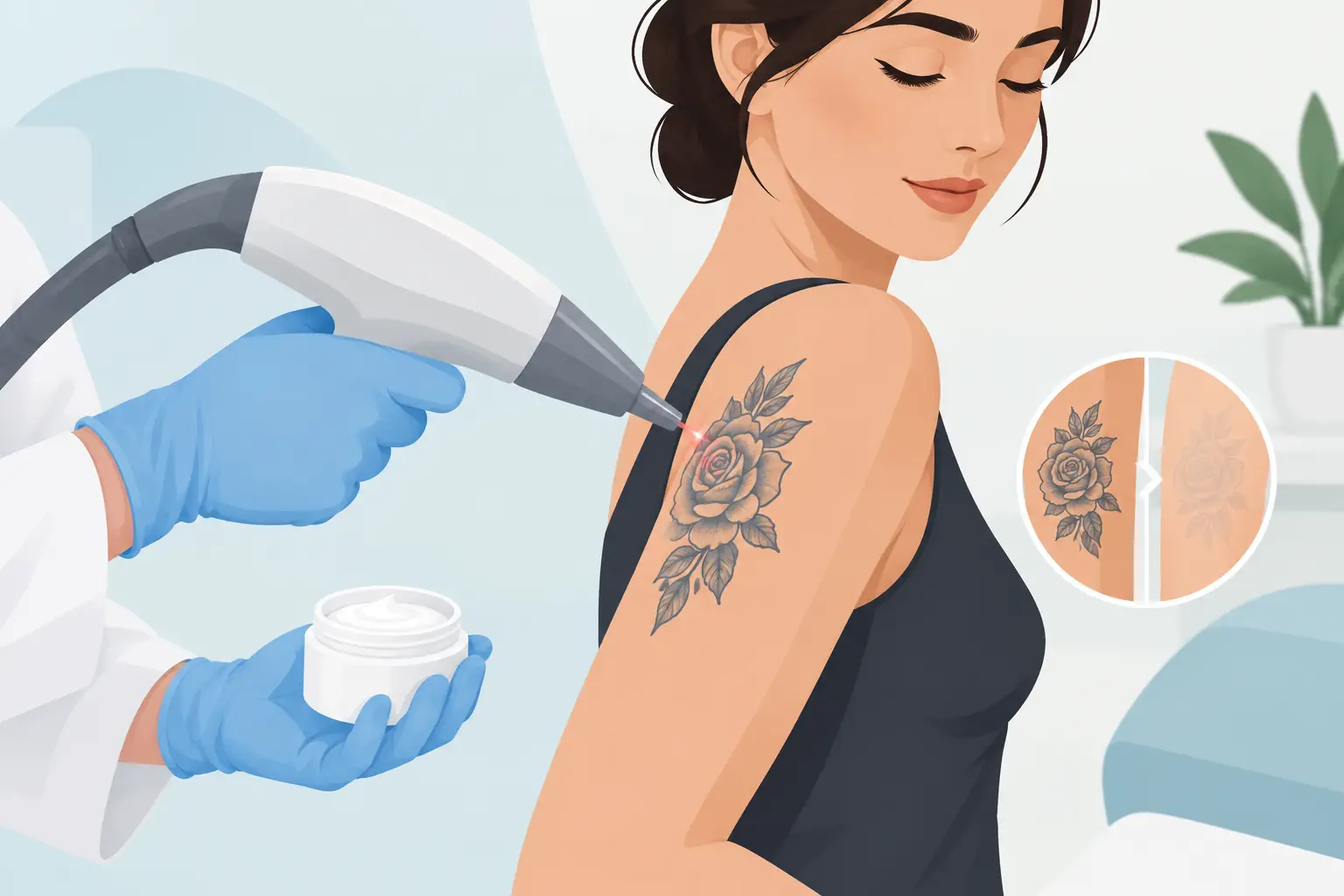
Laser tattoo removal is not a treatment most people describe as relaxing. The sensation is often compared to hot oil flicking against the skin, followed by heat and tenderness around the treatment area. It is completely reasonable to ask whether numbing cream for laser tattoo removal can make the appointment more manageable. The short answer is: sometimes, but only when your laser practitioner approves the exact product and application method first.
That approval is not a formality. Laser settings, tattoo placement, skin condition, medical history and the type of removal technology used all affect the plan. Applying the wrong cream, applying it too heavily or arriving with skin covered in a product your clinic has not authorised can delay treatment or mean it cannot go ahead at all.
Why your laser practitioner must approve numbing cream
A laser removal specialist needs to assess your skin clearly before treatment and use settings appropriate for the ink, location and your response to previous sessions. Some clinics provide pain relief themselves. Others ask clients to arrive with clean, product-free skin, while some permit a specific topical numbing product before the appointment.
There is no one-size-fits-all answer. A small tattoo on the outer arm may be tolerable without topical numbing, particularly during a short session. A large, dense tattoo, a sensitive placement or a lengthy removal plan may call for a different conversation. Your practitioner may also prefer cooling, short treatment intervals or another method alongside, or instead of, cream.
Do not assume that a cream suitable before a tattoo appointment is automatically suitable before laser work. The skin is being treated differently, and your clinic’s protocol comes first. Send them the product name and ingredients before you buy or apply anything. If they say no, attend with clean skin and follow their pain-management advice.
What numbing cream can and cannot do
When correctly selected and used under professional guidance, a topical numbing cream may reduce sensation at the skin’s surface and help some clients feel less anxious about treatment. That can be particularly useful if worry about pain has been putting off an appointment you want to attend.
It will not make laser tattoo removal sensation-free for everyone. Numbing strength varies between products and individuals, and laser treatment can still create heat, pressure and discomfort. Removal sessions may also feel different as the tattoo fades, depending on the colours remaining, the area being treated and how your skin reacts.
It also does not replace aftercare. Redness, swelling, tenderness and temporary skin changes can occur after laser removal even where a topical product was used beforehand. Your practitioner should explain what to expect, how to protect the area and which symptoms mean you should contact the clinic.
Choosing a product without taking unnecessary risks
If your practitioner confirms that topical numbing is appropriate, buy from a trusted specialist supplier rather than choosing the lowest-priced listing on a marketplace. This is one area where a cheap tube can become an expensive mistake.
Counterfeit numbing products are a real concern. They may use copied packaging, questionable ingredient information, fake certificates or inconsistent formulations. In the worst cases, the product received is not what was advertised at all. That leaves you unable to tell what has been applied to skin that is about to undergo a powerful cosmetic procedure.
Genuine stock, clear product information and responsive support matter. At TKTX Tattoo, the colour range is designed to make selection more straightforward: Yellow and Black are positioned for deep numbing, while Gold, Red and White are fast-numbing options. But the right choice for laser removal is never simply the strongest option. It is the one your practitioner has confirmed is suitable for your treatment and skin.
Avoid any seller making unrealistic promises, using unclear photographs, offering products at prices that appear too good to be true or providing no meaningful contact details. Authenticity should be easy to verify, not something you have to gamble on.
How to prepare if your clinic says yes
Your clinic should give you the exact timing for application. Follow it precisely, along with the instructions supplied with the product. More cream, a longer application time or extra layers do not necessarily mean better numbing. They can increase the chance of skin irritation and make it harder for your practitioner to work safely.
Before treatment day, tell the clinic about allergies, skin conditions, pregnancy or breastfeeding, medicines and any previous reaction to local anaesthetics or topical products. This is especially important if the area is already irritated, sunburnt, infected, broken or healing from a previous session. Do not put numbing cream on compromised skin unless a qualified professional has specifically advised you to do so.
A patch test may be sensible when you are using a product for the first time, but it is not a substitute for the clinic’s approval or for reading the directions. If you notice itching, rash, unusual burning, swelling or any other reaction, remove the product as directed and seek professional advice. Do not continue because your appointment is booked.
On the day, arrive prepared to explain exactly what you used, how much you applied and when. Be honest if you left it on longer than instructed or used a different product. Your practitioner needs accurate information to decide whether it is safe to proceed.
Do not use numbing cream to push through a problem
Pain relief should support a properly planned appointment, not hide an issue that needs attention. If the treated area feels unusually painful after a session, looks increasingly inflamed, develops worsening blistering or you feel unwell, contact your laser clinic or seek medical advice promptly. Follow the aftercare they provide rather than applying extra products in the hope of settling the skin faster.
The same principle applies during treatment. Let your practitioner know if the discomfort is more than expected. They may pause, adjust the approach, use cooling or recommend splitting work over further sessions. A good removal plan is paced around your skin’s response, not built around enduring as much as possible in one sitting.
Questions worth asking before you order
Ask your laser clinic whether they permit topical anaesthetics, whether they recommend a particular active ingredient or product type, how long before treatment it should be applied and whether they want it removed before you arrive. Also ask whether there are any reasons it would not be suitable for your skin, tattoo location or treatment plan.
If the answer is unclear, do not guess. Book the appointment first, get the clinic’s guidance in writing if possible, then purchase a genuine product that matches that guidance. This avoids last-minute stress, wasted product and the disappointment of being turned away on the day.
Laser tattoo removal takes patience. Comfort matters, but so do skin safety, authentic products and a practitioner who is willing to tailor the treatment to you. Get approval first, follow the instructions exactly and give your skin the calm, considered preparation it deserves. Happy Numbing!